PaloSantoDoneRight: Every Order You Place Restores a Forest
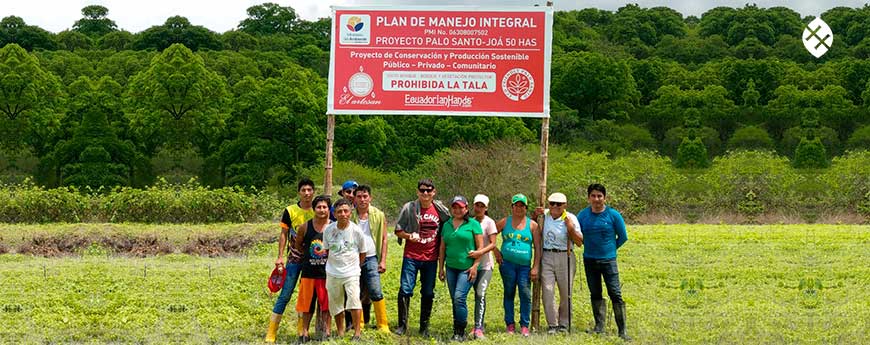
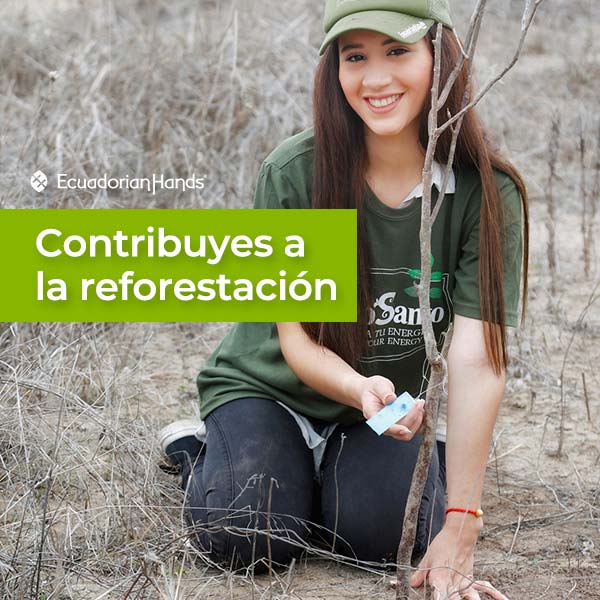
12,000+ trees reforested. 35 community guardians trained. 300+ environmental talks delivered. 30 consecutive beach cleanups.
This isn't a sustainability statement — it's what your purchase funds, today, in Ecuador.
Why We Never Rush Nature
At EcuadorianHands, we don't cut down Palo Santo trees. We can't — and we wouldn't want to.
The true aroma of Palo Santo (Bursera graveolens) only exists because a tree lived a full life, died naturally, and rested on the forest floor for 2 to 4 years. During that time, the heartwood slowly develops the limonene, α-terpineol, and aromatic resins that give authentic Palo Santo its scent. Wood cut from a living tree simply doesn't have it — no resin, no aroma, no magic.
So here's what that means for the wood in your hands: every stick comes from a tree that lived at least 35 years before it fell. Nothing was harvested early. Nothing was forced. The wait is the reason it works.
The Forest Behind the Wood
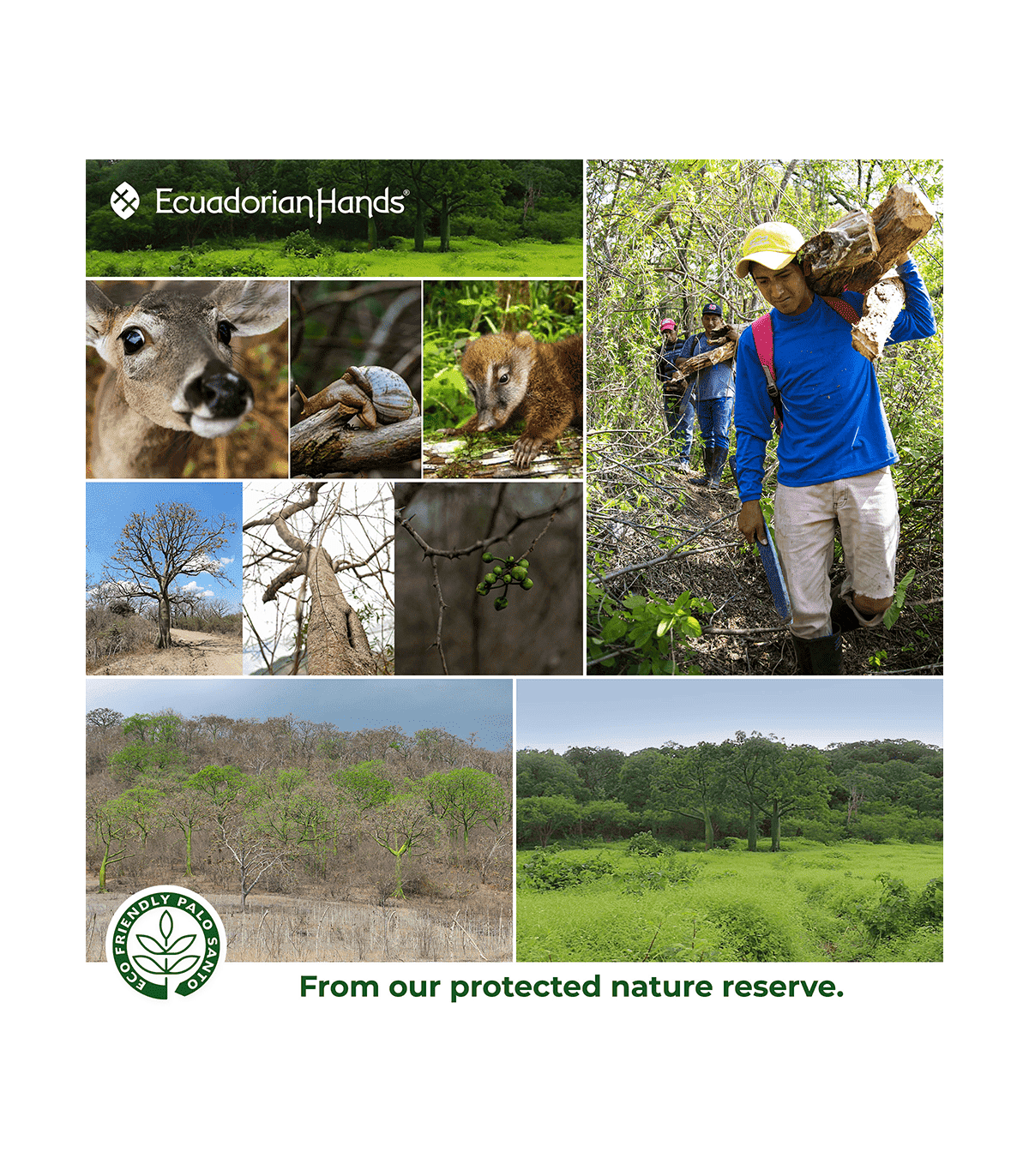
Palo Santo grows in Ecuador's Tropical Dry Forest — one of the most threatened ecosystems in the country, pressured by monocultures, illegal settlements, and unregulated logging. In Manabí, Bursera graveolens is the second most ecologically vital species in this habitat.
For over 10 years, we've tied your purchase directly to its survival:
- 12,000+ trees reforested, identified, and georeferenced
- 50 hectares protected in the Bosque y Vegetación Protector "El Artesan" – EcuadorianHands
- Scientific partnerships with universities and GIZ Ecuador (the German cooperation agency) to guarantee sustainable harvest
What Your Purchase Actually Funds
When you buy from us, you're not just closing a transaction — you're closing a loop:
- Responsible gathering creates real employment in coastal communities
- That revenue funds environmental education through our EcoPlayas program
- Education builds stewardship — residents, fishers, and local youth become protectors of the forest
- A protected forest regenerates, producing the next generation of Palo Santo
Your purchase specifically supports Ecuador's dry forest reforestation program and EcoPlayas' #LlévateTuBasura (Leave No Trace) initiative — the campaign changing how coastal communities treat their beaches.
The 30 + 2 Rule: How You Know It's Real
Genuine Palo Santo follows one non-negotiable timeline: a 30-to-40-year life cycle, followed by 2 to 4 years of natural curing after the tree dies. No shortcut produces the same aroma. No living tree can replicate it. If you're holding real Palo Santo, you're holding proof that nature was given the time it needed.
Every order continues a 25-year story in Manabí — one where buying doesn't cost the forest, it grows it.
 Worldwide shipping since 2005








 English
 Español