Palo Santo Integrated Management Plan (PMI): A Model for Ethically Sourced, Zero-Waste Palo Santo
Updated 9/16/2025
- What it is: An Integrated Management Plan (PMI) that prevents, controls, and corrects impacts, with flora and fauna monitoring, to ensure the sustainable use of Palo Santo (Bursera graveolens) in the dry forest.
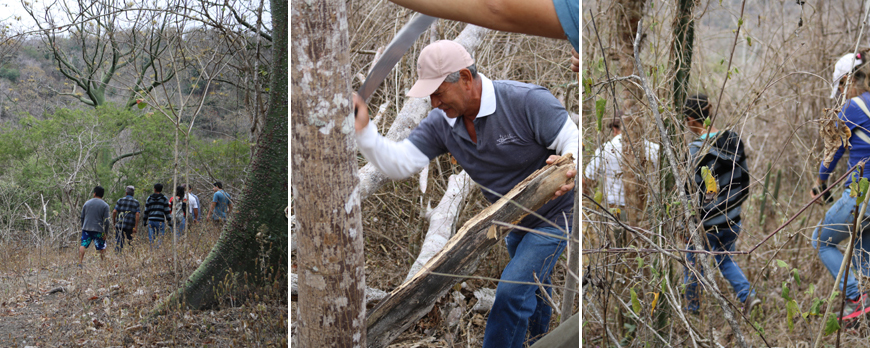
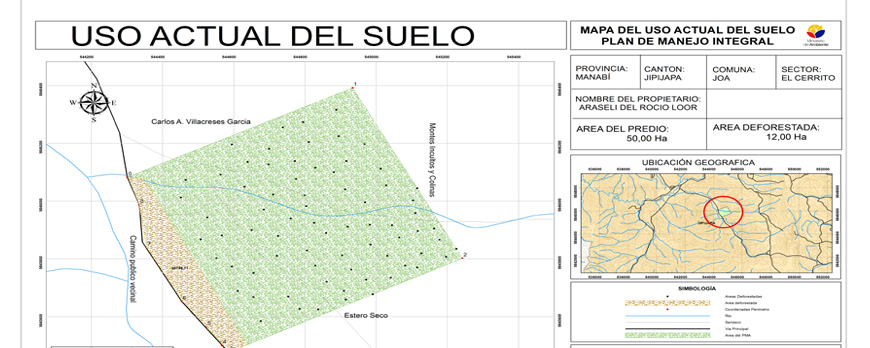
- Where: Jipijapa Canton (Manabí), Joa commune – El Cerrito sector, 50 ha, altitude 220–320 masl.
- How: Reforestation of 5,000 trees, community control, exclusion from SNAP areas, MAE license and mobilization guides, full traceability from forest to laboratory.
- Why it matters: Conserves the dry forest, strengthens local incomes, and guarantees ethically sourced palo santo with a zero-waste approach (utilization of natural dead wood, efficient waste use, and a circular economy).
1) Dry Forest, Palo Santo, and the Need for a PMI
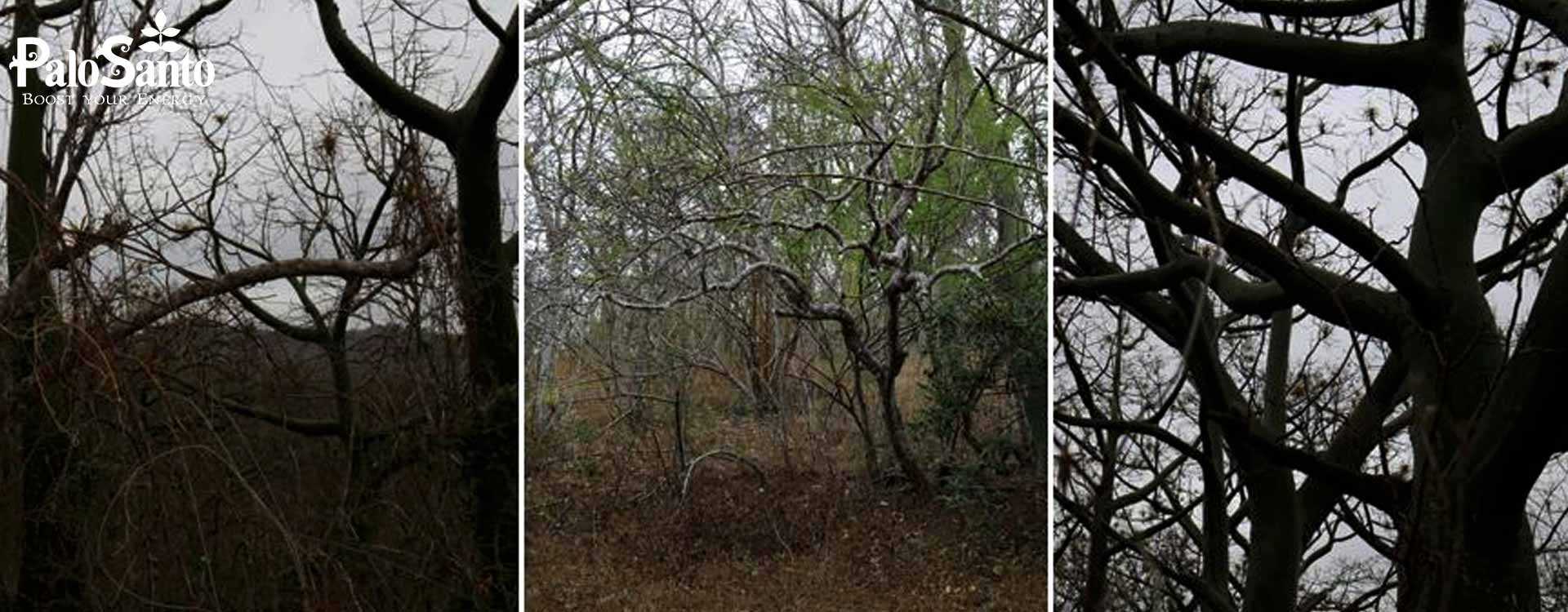
The dry forest is an ecosystem of high biological importance: leafy during the rainy season, deciduous during the dry season, and habitat for native species such as Palo Santo (Bursera graveolens), a tree with a citrus-woody aroma valued culturally and therapeutically. In Ecuador, these forest remnants sustain rural communities and require planned management to maintain them and generate long-term benefits.
The PMI governs this management. It defines actions to prevent, control, and correct impacts; it incorporates flora and fauna monitoring, follow-up plans, and community participation. This prevents overexploitation, protects natural regeneration, and ensures that the use of wood and its derivatives (essential oils, incense, soaps, and cosmetics) occurs under criteria of sustainability and traceability.
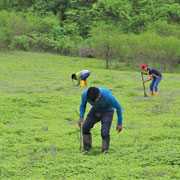
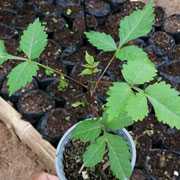
On the Joa/El Cerrito property (50 ha), the project includes planting 5,000 Palo Santo trees and implementing sustainable silvicultural management. In addition, companion vegetation (black wood, guayacán, carob, and ceibo) and associated fauna (e.g., white snails that are harmless to Palo Santo) have been identified. This approach combines conservation with local well-being, respecting the natural cycle of Palo Santo, whose wood is only harvested when the tree dies naturally, aligning the PMI with a model of ethically sourced Palo Santo.


2) Operational Framework: PMI Requirements, MAE Licenses, and SNAP Exclusions
To operate, the PMI integrates key elements:
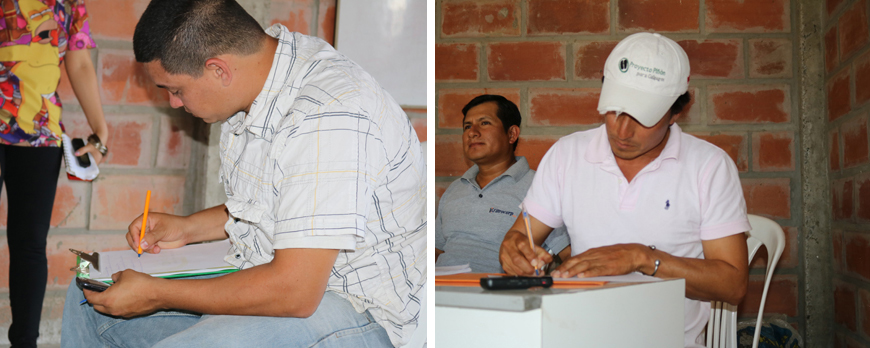
- Community engagement: formal meetings with the community (attendance minutes and agreements).
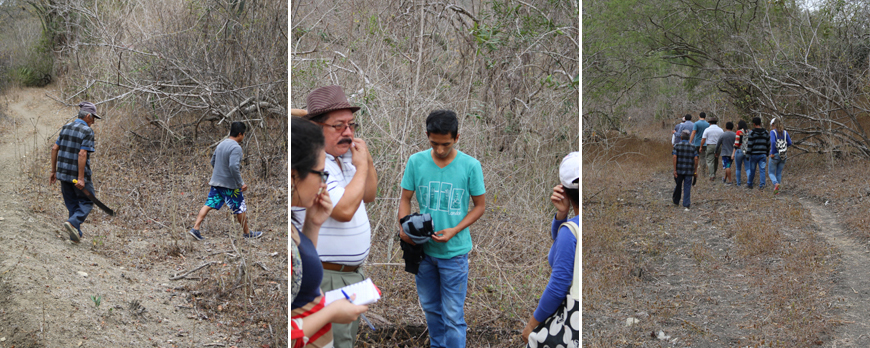
- Technical delimitation: location and description of the area, terrain sketch, and georeferenced information (≥4 GPS points).
- Ecological assessment: flora and fauna baseline, and fire prevention and control plan.
- Land use: sworn declaration of maintaining forest use.
- Exclusions: no intervention in SNAP (National System of Protected Areas) areas.
With these requirements, the Ecuadorian Ministry of the Environment (MAE)—now MAATE—grants the sustainable forestry license and issues movement guides for Palo Santo timber/firewood. This enables regulated harvesting, with documentary and field audits, and support for traceability: land use planning, planting, forest control, quality control, collection of natural deadwood, transfer to the laboratory, distillation, and evaluation of the final product.
Practical Points of the PMI in Joa/El Cerrito
- Stand composition: ~90% female Palo Santo and 10% male; monitoring is carried out by the Ministry of Agriculture and Livestock (MAE).
- Protections: ecological enclosures and living barriers (e.g., muyuyo) to prevent livestock damage; pest management and fire control.
- Local economy: Community members can collect Palo Santo from the property in a regulated manner, generating a fair income and territorial roots.


3) License, social participation, and agreement protocols in the Joa Commune
The sustainable license is obtained after a clear social and technical process:
- Project and zoning: The 50-hectare area and its use are defined, mapped, and UTM WGS 84 17S coordinates are established.
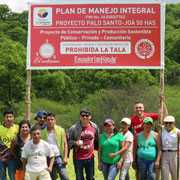
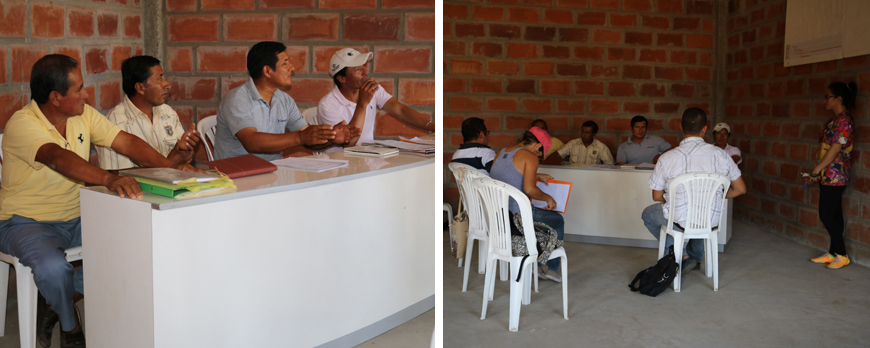
- Liaison: Meeting at the Joa chapel with the environmental consultant (itinerary and regulations), communal authorities (president, vice president, secretary, treasurer), and forestry technicians. PMI requirements, environmental and economic benefits, and the scope of the owner's sworn statement are explained.
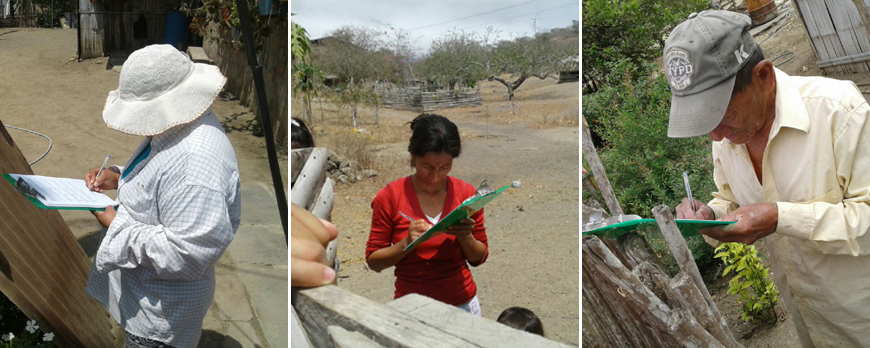
- Social survey: 16 families evaluate the project (questions about forest protection, reforestation, economic impact, and authorization for organic harvesting). The result was favorable, allowing for progress toward agreements and the signing of assistance.
- Agreements: The community authorizes the implementation of the PMI and the collection of dead wood under the guidance of the Ministry of Environment and Natural Resources (MAE), recognizing mutual benefits: employment, training, legal security in management, and improved family income.
This process not only legitimizes sustainable use; it strengthens local governance and creates a replicable precedent for other dry forests, integrating environmental education, responsible tourism (e.g., proximity to Puerto Cayo and hot springs), and a transparent value chain.


4) Traceability and “Zero Waste”: From Forest to Laboratory
The PMI promotes a circular economy and zero waste model:
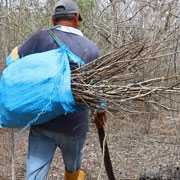
- Ethical origin: only wood that falls naturally after its life cycle (resting for a minimum of 2–4 years in the forest). This preserves the resin and quality aromatic compounds, the cornerstone of ethically sourced palo santo.
- Field sorting: verification of the “heart” to differentiate between female (suitable for aromatherapy) and male (unsuitable); identification of “yellow,” “black,” or “white” wood according to use.
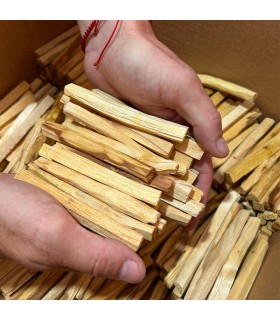
- Total, utilization: trunks and branches useful for incense and cones; fine fractions as mulch or biomass to improve soil; continuous improvement in distillation performance.
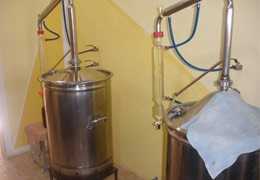
- Documented chain: MAE mobilization guide, laboratory reception, steam distillation, water-oil separation, purification, and packaging.
- Quality control: batches traced by date, area, and guide; organoleptic and chromatographic testing, where applicable; standardization of essential oil and incense sticks.
Furthermore, local knowledge recognizes termites as degraders of dead wood: they consume useless tissue and leave the most valuable aromatic portion intact. Thus, nature itself helps select the most suitable material, reducing waste and reinforcing PMI's zero-waste approach.
5) Results, Education, and Next Steps
Following approval, a sustainable harvesting scheme with traceability and active reforestation was consolidated. Key milestones:
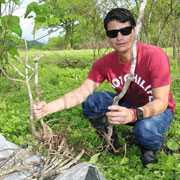
Reforestation in progress: 3 hectares established, with 1,600 Palo Santo seedlings and 100 Pepito Colorado trees, planting an additional 30% to offset losses due to the influx of livestock.
Collection Center: Design of a hub where the community classifies, dries, and dispatches material, reducing waste and logistics costs.
Academic Agreement: Projected agreement with UNESUM for Forestry, Environmental, and Agricultural Engineering internships, strengthening citizen science, permanent inventories, and participatory monitoring.
Education and Markets: EcuadorianHands markets and exports Palo Santo essential oils, incense, soaps, and cosmetics, adding local value and financing further restoration.
Vision: Demystify Palo Santo, promote its proper use, expand dry forest reforestation, and maintain an open standard for verifiable ethically sourced palo santo trees, inspiring consumers and businesses to choose zero-waste supply chains.
Project Fact Sheet
- Location: Jipijapa Canton (Manabí), Joa Commune – El Cerrito sector
- Area: 50 ha | Altitude: 220–320 masl
- Objective: Reforest 5,000 Palo Santo trees; sustainable forest management with traceability
- Social: Outreach meetings; survey of 16 families (majority approval)
- Regulations: MAE license; mobilization guides; SNAP exclusion
- Status: 3 ha reforested; 1,600 Palo Santo trees + 100 Pepito Colorado trees; Living barriers and fire control
- Production: Collection of natural dead wood → stockpiling → laboratory → steam distillation → essential oil, incense, cosmetics.
FAQ
Why is a PMI necessary for Palo Santo?
Because it regulates dry forest management with impact prevention, ecological monitoring, and traceability, a requirement for MAE licenses and transportation guides, guaranteeing ethical origin.
What does "zero waste" mean in this context?
Harvest only dead wood and use every fraction: from pieces for incense to residues such as mulch or biomass, optimizing distillation and logistics to minimize waste.
How does the community participate?
Through outreach meetings, surveys (16 families participated in Joa), agreements for regulated collection and use in stockpiling, nurseries, and monitoring.
How is the quality of the essential oil ensured?
With batch traceability, steam distillation, organoleptic controls, and records from the forest to the laboratory. Female wood (with "heart") offers a better aromatic profile.
What progress has been made in reforestation?
3 hectares planted: 1,600 Palo Santo and 100 Pepito Colorado trees, with compensation planting (+30%) for possible losses.
Articles of interest:
- Palo Santo Sustainability: Separating Fact from the fake news. Is Palo Santo really endangered?
- El Artesan - EcuadorianHands: The Protected Natural Reserve Revolutionizing Environmental Conservation and Benefiting Local Communities
- EcuadorianHands Successfully Germinates Palo Santo Seeds for its Reforestation Program


Leave a comment